
Family Economic Security and Success
The Diaper Bank of CT is all about making great things possible. Low-income parents want the same things for their children that anyone else does: health, joy and opportunity.
A seemingly small thing – an adequate supply of diapers – affects families in big ways. It allows parents to maintain employment or finish their education, and increases the health and safety of babies.
In Diaper Need Across the U.S., a manuscript under review from Pediatrics, 2020, Dr. Smith found:
“Of families in diaper need, three in five parents (57%) miss work or school due to a lack of sufficient diapers required by childcare, day care or early education programs to care for a baby or toddler. As a result, parents experiencing diaper need missed an average of four days of work or school in the past month.”
In Connecticut, child poverty is a severe problem: it affects 36.7% of the population in Bridgeport; 48.8% in Hartford; 33.4% in New Britain; 37.3% in New Haven; and 38.8% in Waterbury (U.S. Census Bureau, October 2014). For families living in poverty, the cost of infant care consumes 12% of the total household income for a two-parent family, and 49% of income in a single-parent household.
All of the families The Diaper Bank of CT serves are low-income, meaning their annual household income is less than 200 percent of the federal poverty level.
“Low-income families of young children face many obstacles and, at the same time, want to be good parents. Something as basic as a diaper should not be a need that is unmet in a state like ours, in a country like ours. At the very minimum, we should ensure that families have what they need to care for our most vulnerable citizens.”
– Janet Stolfi Alfano, Executive Director
Diapers are a basic need for families’economic security.
Diapers can cost a family around $1,200 to $1,800 per year. That can be a large percentage of a poor family’s income. Low-income families also may have to buy diapers at a premium per diaper if they do not have access to a big-box store.
Research Report Links
Smith Report
Health Equity/Smith
Messengale Report
Carstensen report
Sadler Report
A 2018 report by Fred Carstensen and Peter Gunther of the Connecticut Center for Economic Analysis at the UConn School of Business found that:
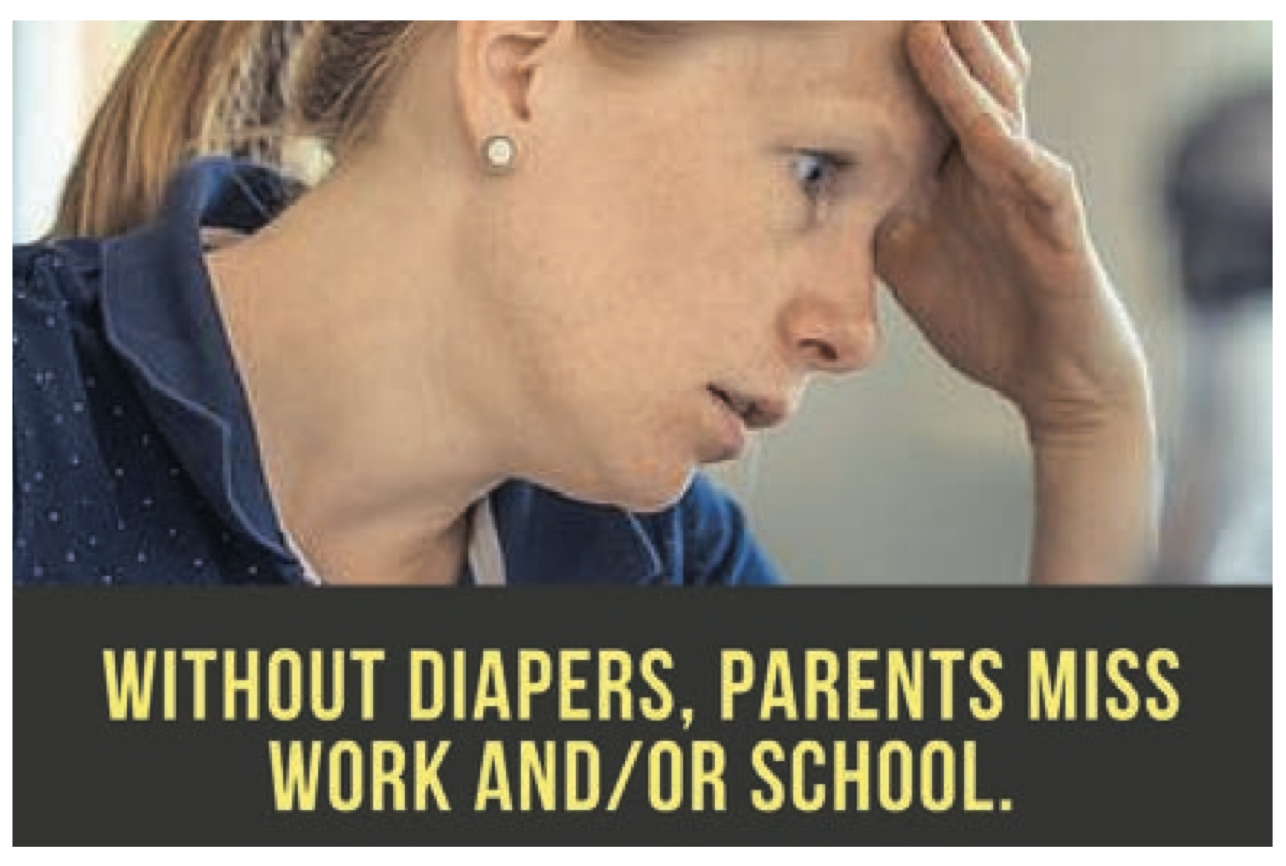
Without diapers, parents miss work
More than half (56%) of parents using childcare to go to work have missed work because of an inadequate supply of diapers. Parents unable to access childcare due to diaper need missed work or school on average 4 days per month.
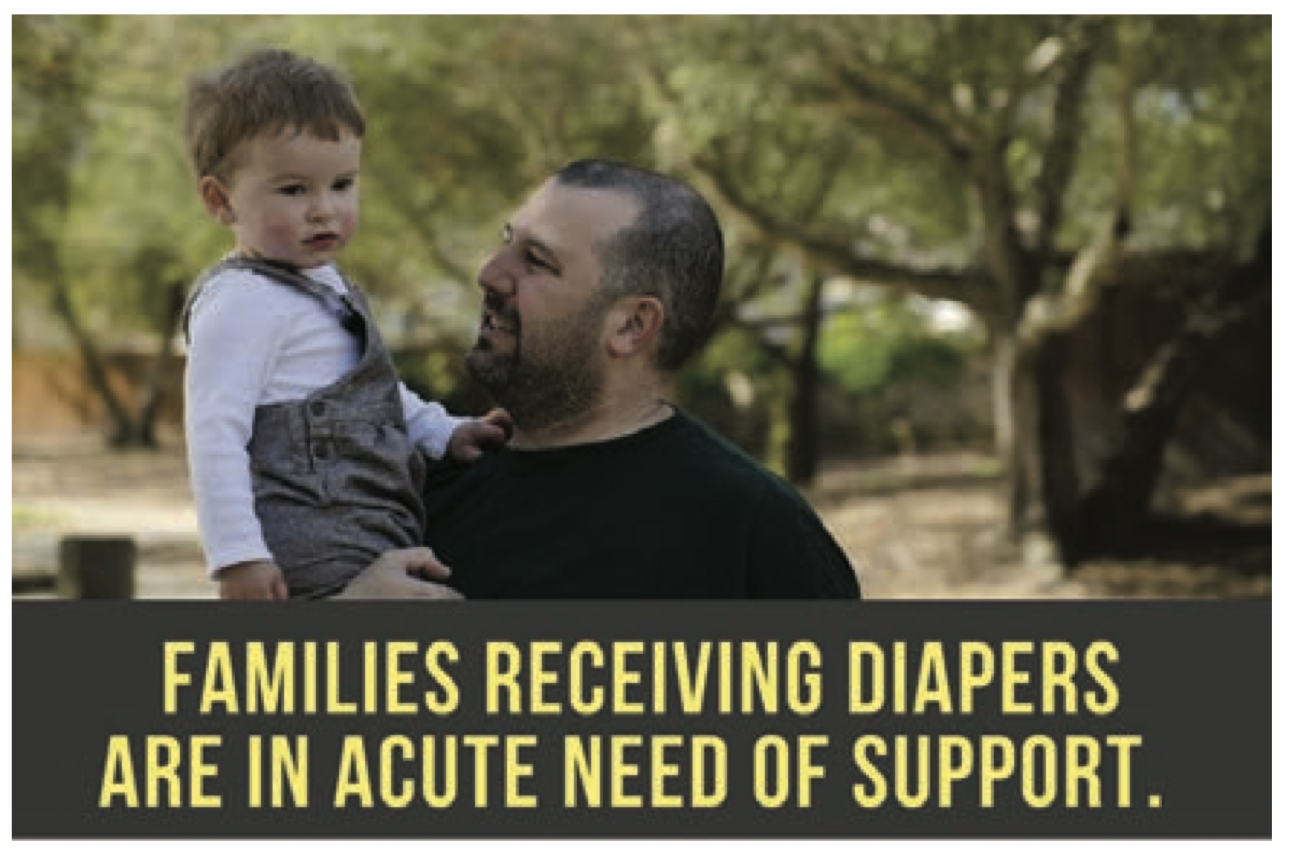
Families receiving diapers are in acute need of support
More than 60% of families receiving diapers report incomes of less than the $20,000 per year, well below the federal poverty level. More than 90% of families receiving diapers live on less than $40,000 per year, which is approximately 160% of the federal poverty level for a family of three.
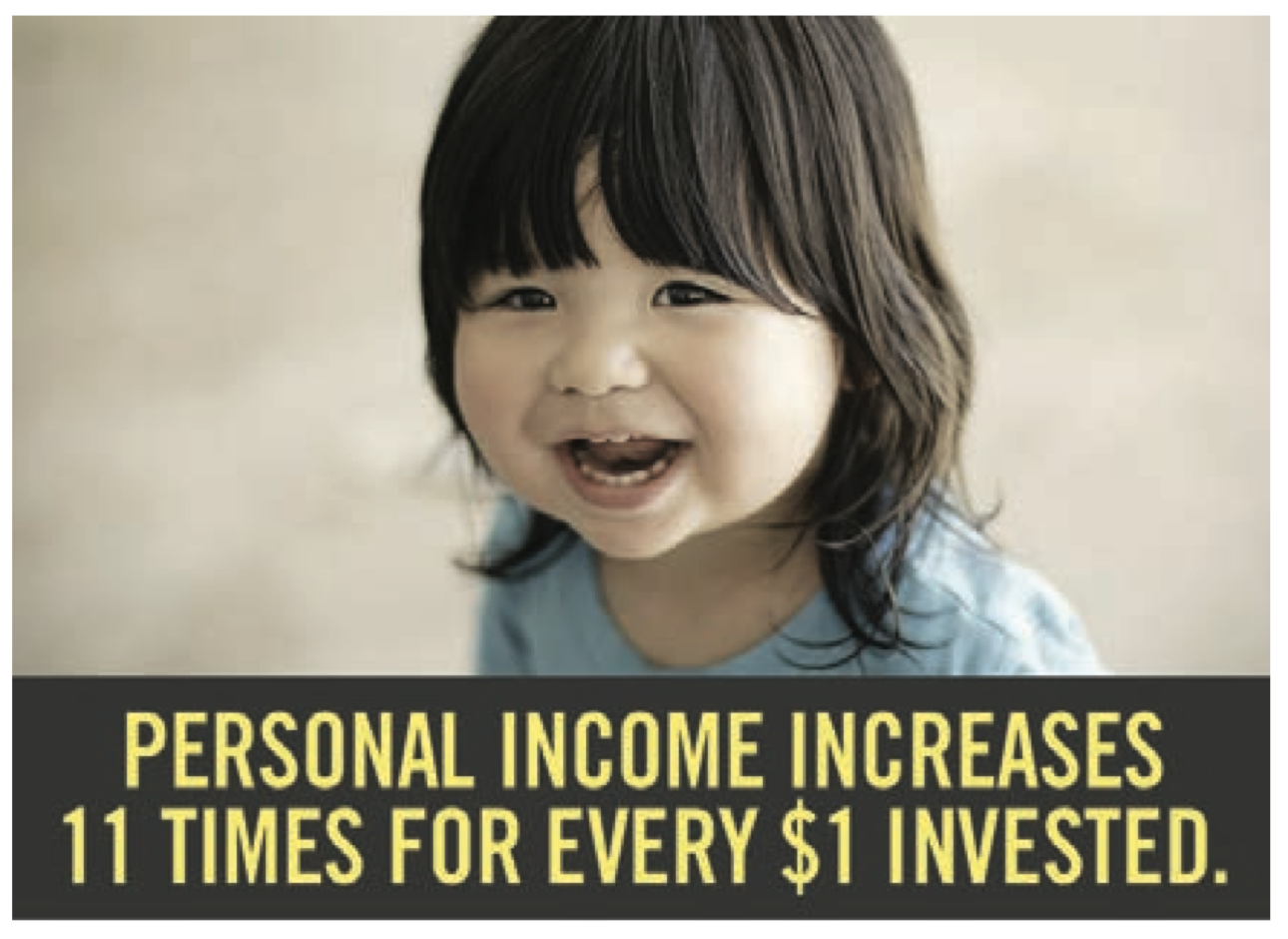
Personal income increases 11 times for every dollar invested in diaper assistance.
For every $10,000 of assistance from The Diaper Bank, total personal income of all diaper recipients increased by $114,000 in 2016, with increases of $296,000 projected by 2031, when adjusted for inflation and the accumulating education wage and salary supplements within the model.
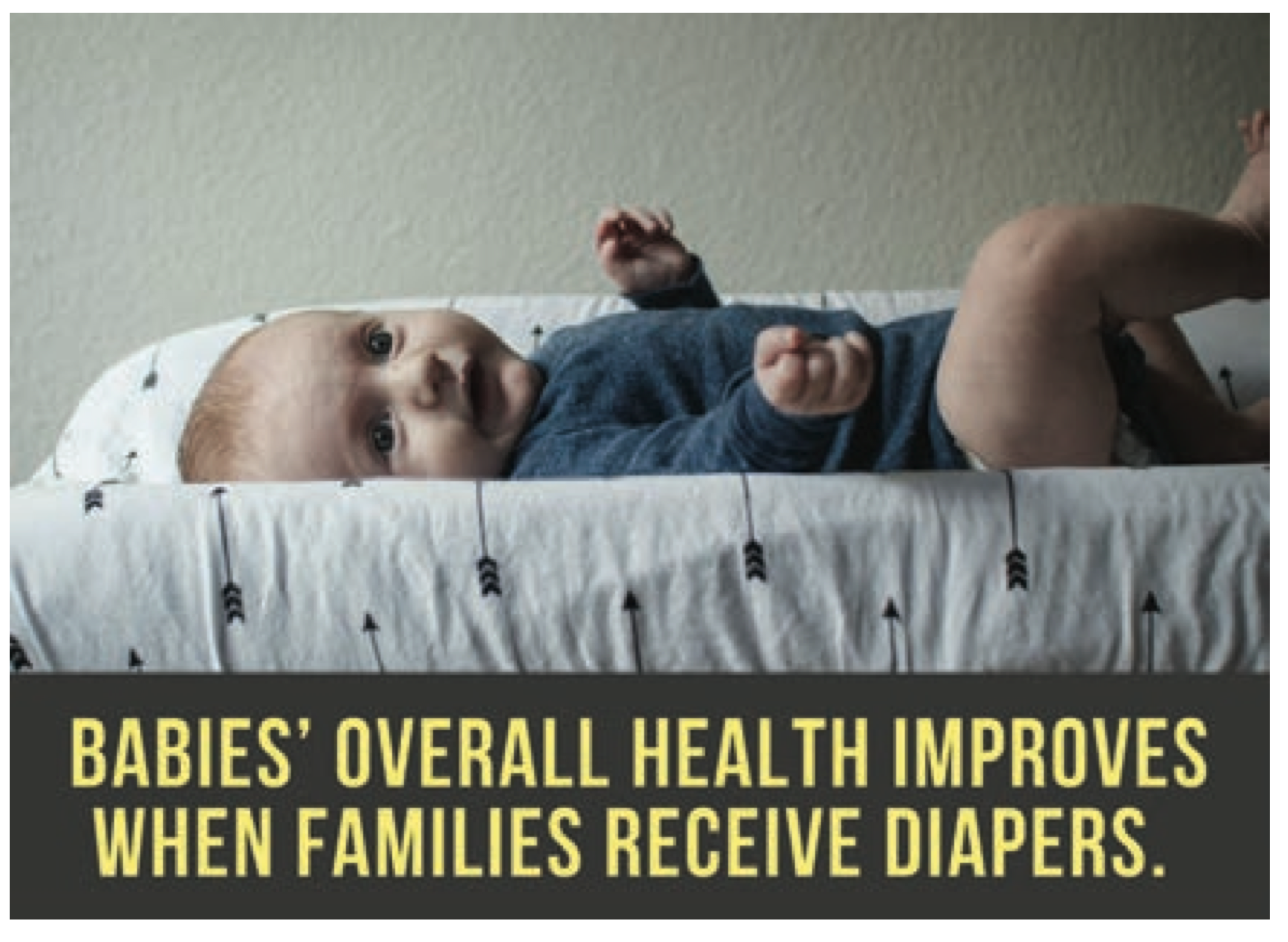
Receiving diapers helps parents complete educational programs.
Completing educational programs improves diaper recipients’ annual earnings potential by nearly $10,000, on average. Based on the level of programs in which diaper recipients are enrolled, successful completion of these programs would increase the expected wage and salary base of all students in diaper recipient households by $1,825,638. This amounts to an average wage and salary increase of $9,985 annually per graduate.
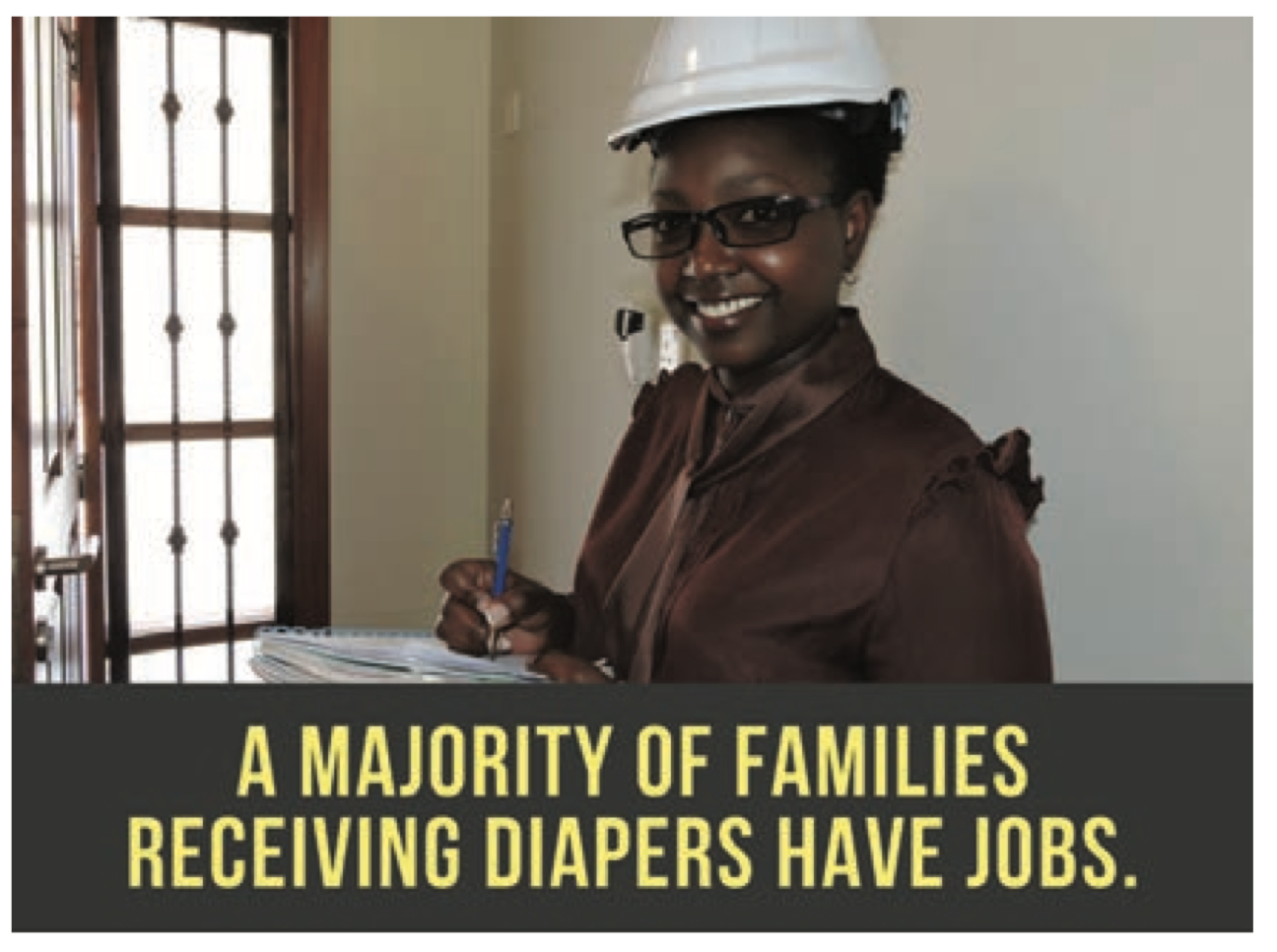
Childcare provides the opportunity for families to go to work.
One in three (33%) recipient households rely on childcare an average of 4.5 days per week. The dominant reason is to go to work: 75 percent say work is the sole reason; and another 20 percent cite work as one of multiple reasons.
Providing diapers increases state tax revenues.
For every $10,000 (in today’s money, delivered annually) of diaper assistance provided by The Diaper Bank, personal income taxes accruing to the State increases from $3,700 in 2016 to $9,900 in 2031.
Health of Mom & Baby
Diapers help improve the health and wellbeing of both mom and baby
Quality Early Education
Diapers increase access to early childhood education opportunities
Get Involved
There are many ways to get involved and support our work and mission of helping families in need.